


London | Updated: June 26, 2026
The UN International Maritime Organization has temporarily paused its operation to escort ships through the Strait of Hormuz after a cargo vessel reported an attack near Oman, raising fresh concerns over maritime security in the region.
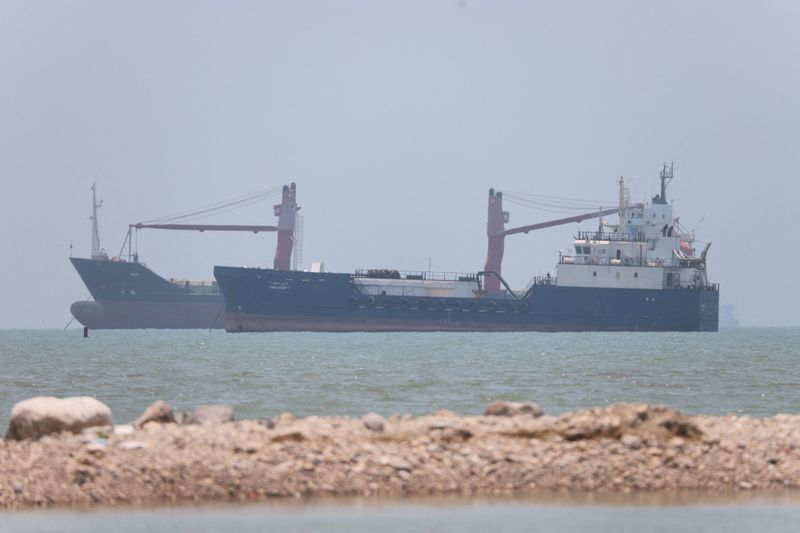
According to the British Navy agency UKMTO, the cargo ship reported that it had been hit by a projectile close to Oman. The incident came just hours after Tehran warned vessels against using routes not approved by Iranian authorities.
Two US officials told Reuters that Iran had fired on the ship. However, Iran’s Persian Gulf Strait Authority said ships traveling outside routes designated by Tehran would not be guaranteed safe passage.
The Iranian authority said that any consequences arising from passage through unauthorized routes would be the responsibility of the ship’s owner, operator, and commander.
Four sources identified the vessel as the Singapore-flagged Ever Lovely. A security source said the ship was likely targeted by a drone. There was no immediate comment from the US government.
The incident has once again raised questions over whether the preliminary agreement aimed at ending the Iran conflict and reopening the Strait of Hormuz can remain effective.
The IMO had been assisting hundreds of stranded ships and thousands of seafarers stuck in the strait since the start of the conflict in late February. IMO Secretary General Arsenio Dominguez said the agency decided to temporarily pause the operation to reconfirm that necessary safety guarantees remained in place for ships on its evacuation list and other vessels in the region.
The IMO clarified that the ship involved in the suspected attack was not part of its evacuation program.
The escort initiative was launched on Tuesday as a voluntary option for ships and crew to leave the Gulf through two routes, one via Iranian waters and the other through Omani waters, with US oversight.
Following reports of the attack, benchmark oil prices rose around 2 percent as traders feared renewed disruption to Gulf energy supplies. Before the conflict, the Strait of Hormuz handled nearly one-fifth of the world’s daily oil and liquefied natural gas shipments.
US Secretary of State Marco Rubio said that if Iran threatened or blocked ships in the strait, it would create a serious problem. Iran, however, has signaled that it will continue asserting control over the waterway.
Iran’s Revolutionary Guards said safe passage through the Strait of Hormuz would only be possible through routes designated by Iran. They also warned that action would be taken against vessels that failed to comply.
British maritime security company Ambrey said Iran’s Revolutionary Guards also ordered two Panama-flagged ships to change course on Thursday.
Earlier, US Energy Secretary Chris Wright said shipments through the strait were nearing levels seen before US and Israeli strikes on Iran began on February 28. He said at least 20 million barrels of oil had moved through the waterway in the previous 24 hours.
Shipping data also showed that crude shipments through the Strait of Hormuz had risen this week to their highest level since the conflict began. South Korea’s Oceans Ministry said eight more South Korean vessels had exited the strait.
The fresh attack has added pressure on the fragile ceasefire framework, which still faces disagreements over financial incentives for Iran, nuclear inspections, control of the Strait of Hormuz, and Israel’s parallel conflict in Lebanon.
The deal is expected to lead to 60 days of talks on more complex issues, including Iran’s nuclear program and long-term security arrangements in the Gulf.