

Chandigarh | Updated: July 16, 2026
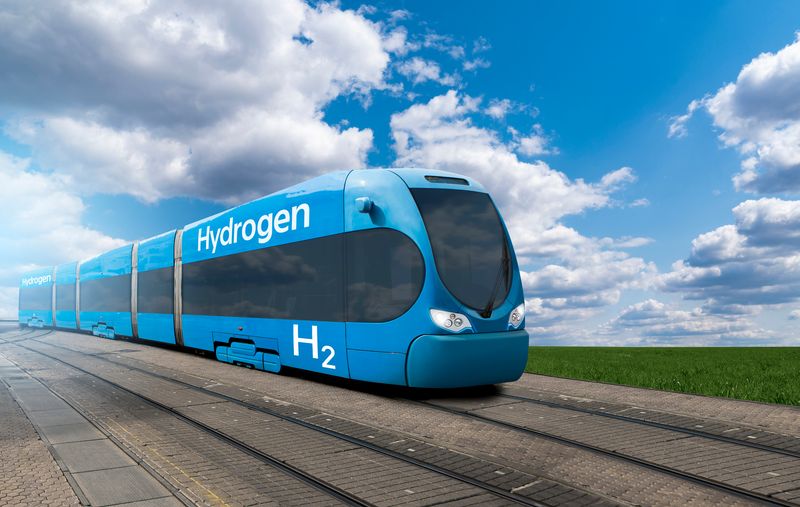
India’s first hydrogen-powered train is set to be flagged off by Prime Minister Narendra Modi from Jind on July 17.
With this launch, India will join a select group of countries such as Germany, Japan, China and the United States that are exploring hydrogen-powered trains for cleaner rail transport.
The train will run on the 89-km Jind-Sonipat dedicated section in Haryana.
It will be a 10-coach train with a maximum speed of 75 kmph.
The indigenous fuel-cell-based Distributed Power Rolling Stock has been designed at the Integrated Coach Factory in Chennai.
The train has a 1,200-kW propulsion system.
After successful trials on the Jind-Sonipat section in 2025, the Railway Board approved the 10-coach hydrogen-powered train on May 22.
According to official communication issued by the Railway Board to Northern Railway on July 8, Hydrogen Train No. 74010 will depart from Jind railway station at 7.40 am during regular service.
It will reach Sonipat at 9.40 am.
A hydrogen train uses fuel cells to generate electricity.
Unlike diesel locomotives, which run on diesel and emit greenhouse gases, hydrogen trains produce electricity through a chemical reaction between hydrogen and oxygen.
Electric trains depend on overhead power cables and require major infrastructure, while hydrogen trains can operate without such electrification systems.
In a fuel cell, hydrogen is supplied to the anode and oxygen to the cathode.
At the anode, hydrogen molecules are split into protons and electrons with the help of a catalyst, usually platinum.
At the cathode, oxygen reacts with protons to form water, completing the process.
The first commercial hydrogen-powered train was launched in Germany in 2018 by French train manufacturer Alstom.
For the Jind-Sonipat hydrogen train, a hydrogen generation and refuelling system has been set up at Jind.
The Petroleum and Explosives Safety Organisation has granted a licence for filling and storage of compressed hydrogen gas in a hydrogen storage system from the hydrogen generation unit.
Safety systems, including hydrogen leak detectors and flame detectors, have been installed at the hydrogen production, storage and dispensing facility.
These sensors will be regularly inspected and cleaned to prevent dust accumulation and ensure safe operation.
The Railway Board has also directed that operation and maintenance manuals approved by the Research Designs and Standards Organisation, Lucknow, must be available for the train and hydrogen plant.
Necessary training and competency certificates will also be ensured for personnel deployed at the hydrogen refuelling station and for the on-board crew.
A 24×7 control room will be manned with access to data logs for the hydrogen refuelling cycle.
The hydrogen train is expected to cover 12 stations on the Jind-Sonipat route.
These include Jind City, Pandu Pindara, Lalit Khera, Bhambeva, Ishapur Kheri, Butana, Khandrai, Gohana, Rabhra, Lath, Mohana Haryana and Barwasni.
Hydrogen is being explored as a clean fuel because it produces nearly three times as much energy as fossil fuels.
It is also the most abundant element in the universe.
When used as fuel, hydrogen produces only water vapour and heat as by-products, making it a cleaner alternative.
Indian Railways conceived the plan for hydrogen-powered trains in 2020-21.
Under the “Hydrogen for Heritage” initiative, Indian Railways had planned 35 hydrogen trains for heritage and hill routes.
The estimated cost was ₹80 crore per train, along with ground infrastructure costing around ₹70 crore per route.
In a Rajya Sabha reply in 2023, Union Railway Minister Ashwini Vaishnaw had said the running cost of hydrogen fuel-based trains had not yet been established in the Indian Railways context.
He had said the initial running cost of a hydrogen train set was expected to be higher, but would come down as the number of trains increased.